Best AI Engineering & LLMOps Groups
Discover top Telegram groups for AI engineering, LLMOps, vector databases, and model deployment. Join real developer communities.
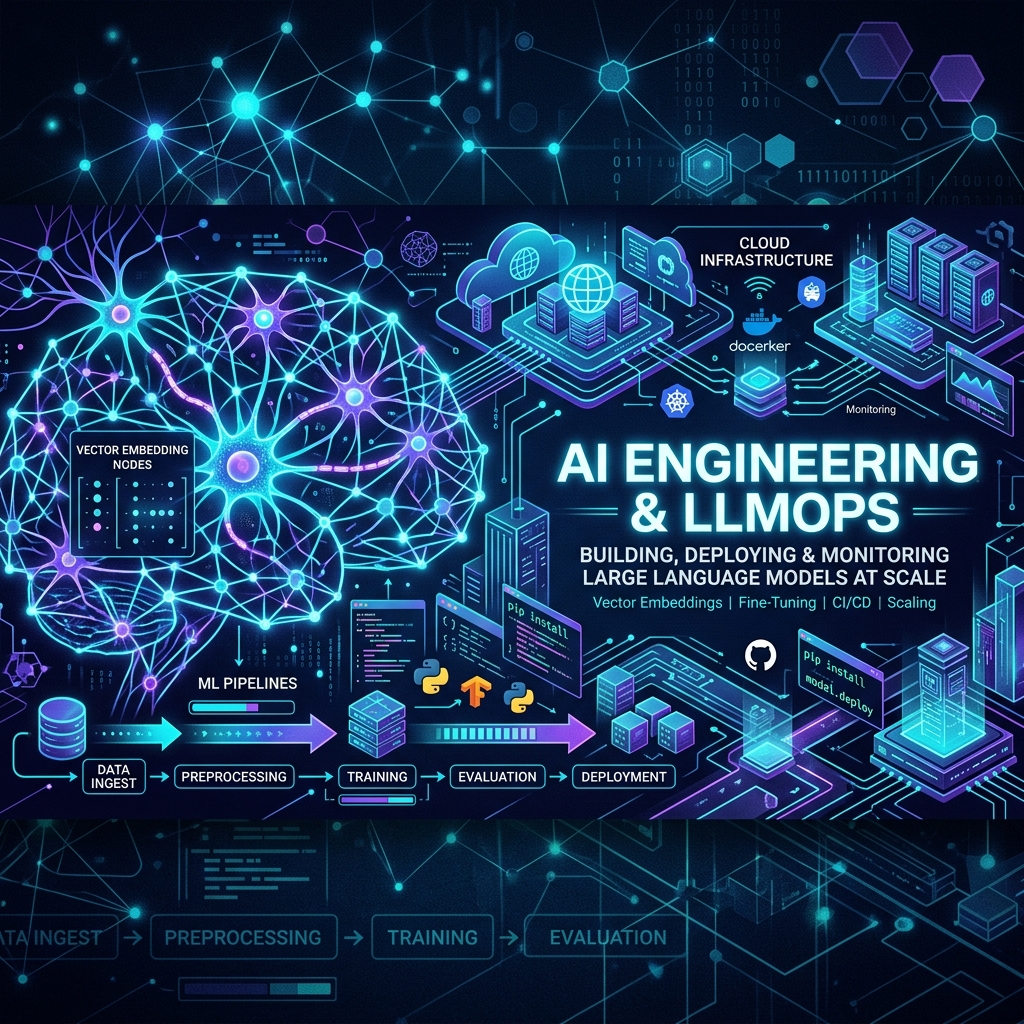
The rapid evolution of artificial intelligence has shifted software development from traditional web applications to autonomous model deployments, complex Retrieval-Augmented Generation (RAG) pipelines, and low-latency inference setups. As enterprise organizations integrate Large Language Models (LLMs) into production workflows, engineers require real-time knowledge sharing platforms to debug infrastructure bottlenecks, optimize prompt orchestration, and monitor AI pipelines.
While formal documentation provides foundational knowledge, active developer chat communities serve as frontline hubs for operational insights. Among modern messaging environments, Telegram has emerged as a key center for AI engineers, data scientists, and infrastructure architects discussing LLMOps tooling, quantization techniques, vector storage, and continuous evaluation frameworks.
Overview of AI Engineering and LLMOps in 2026
Artificial intelligence engineering has matured into a distinct discipline that bridges software engineering, infrastructure automation, and data operations. Operationalizing language models (LLMOps) involves managing the end-to-end lifecycle of machine learning systems in production. Unlike classical software delivery, LLMOps introduces stochastic behavior, non-deterministic outputs, latency challenges, and substantial GPU infrastructure costs.
Modern LLMOps architecture relies on several interconnected components:
- Model serving engines optimized for high-throughput batching and streaming responses.
- Vector embedding databases for high-speed semantic similarity searches.
- Prompt engineering and dynamic context window management modules.
- Guardrail enforcement frameworks designed to prevent prompt injection and hallucination.
- Observability and tracing tools for telemetry logging and latency tracking.
Staying ahead of rapid release cycles in tools like vLLM, Ollama, LangChain, LlamaIndex, and TensorRT-LLM requires continuous dialogue with other active builders.
Why Telegram is Essential for Real-Time AI Development
Telegram provides specialized capabilities that make it ideal for technical engineering exchange. Real-time channels and interactive discussion groups facilitate rapid sharing of GitHub repositories, benchmarking data, deployment scripts, and architectural patterns.
- Instant peer review for complex deployment errors and GPU memory allocation bugs.
- Direct access to open-source maintainers and developer relations engineers.
- Curated updates on breaking research papers and open-weights model weights releases.
- Architecture discussions comparing vector indexing algorithms like HNSW and IVFFlat.
Engineers collaborating on open-source frameworks frequently rely on GitHub Open Source Portal repositories alongside real-time Telegram groups to coordinate patches, share benchmarks, and evaluate alternative infrastructure stacks.
Top AI Engineering & LLMOps Telegram Communities
The following active communities feature thousands of developers, data scientists, and systems engineers actively building, tuning, and deploying AI solutions in production environments.
| Group Name | Username | Members | Primary Focus | Group Details |
|---|---|---|---|---|
| Coders of Code | @codersofcode | 144,173 | Machine Learning & General Dev | View @codersofcode Details |
| Brainy Center | @brainycenter | 132,552 | AI Research & Deep Learning | View @brainycenter Details |
| Dev Developers Zone | @devdeveloperszone | 131,342 | Production System Architecture | View @devdeveloperszone Details |
| Code Hackers | @codehackers | 127,689 | Model Fine-Tuning & Scripts | View @codehackers Details |
| Code Minds Network | @codemindsnetwork | 126,236 | Vector DBs & Retrieval Systems | View @codemindsnetwork Details |
| Python Gurus | @pythongurus913 | 124,163 | Python AI Frameworks & Tooling | View @pythongurus913 Details |
1. Coders of Code — Production Machine Learning and Scale
As one of the largest developer hubs on Telegram, Coders of Code hosts extensive technical conversations on integrating machine learning models into large-scale microservices. Engineers discuss asynchronous API patterns, distributed queuing for inference tasks, and scaling backend workloads under heavy traffic spikes.
Members frequently share benchmarks comparing serverless GPU providers, containerized deployments with Kubernetes, and strategies for minimizing API latency. If you are building robust microservices around generative AI models, explore the community via the View @codersofcode Details page.
2. Brainy Center — Deep Learning Research and Model Evaluation
Brainy Center focuses on the theoretical underpinnings and empirical evaluation of deep neural networks. Discussions range from attention mechanism optimizations to parameter-efficient fine-tuning (PEFT) methods like LoRA and QLoRA.
The community regularly breaks down newly published pre-prints, breaking model releases, and quantization techniques (AWQ, GGUF, EXL2). Members evaluate trade-offs between model accuracy and token throughput. Connect with researchers and practitioners through the View @brainycenter Details profile directory.
3. Dev Developers Zone — System Architecture for Infrastructure
Building enterprise-grade AI systems requires sound backend architecture. Dev Developers Zone serves infrastructure engineers, DevOps practitioners, and backend developers managing complex server environments.
Key topics include load balancing multi-region LLM deployments, configuring NGINX proxies for SSE streaming responses, and managing environment variables securely across cloud provider infrastructure. Check out full details on the View @devdeveloperszone Details page.
4. Code Hackers — Open-Source Models and Custom Fine-Tuning
Code Hackers is a fast-moving community dedicated to hands-on experimentation with open-weights language models and custom code generation scripts. Members share automation workflows, synthetic dataset generation techniques, and fine-tuning pipelines built with PyTorch and Transformers.
Whether you are configuring local inference setups or training custom domain-specific models, this group provides practical code snippets and configuration examples. Learn more by visiting the View @codehackers Details entry.
5. Code Minds Network — Vector Databases and RAG Pipeline Optimization
Retrieval-Augmented Generation (RAG) is a core component of modern LLMOps. Code Minds Network provides dedicated discussions on vector database selection, chunking strategies, embedding models, and hybrid search implementation.
Engineers debate the performance characteristics of vector indices across tools like Qdrant, Milvus, PGVector, and Pinecone. Conversations also cover re-ranking techniques and metadata filtering for semantic search applications. Visit the View @codemindsnetwork Details listing to explore group insights.
6. Python Gurus — High-Performance Python Tooling for LLMs
Python remains the primary programming language for artificial intelligence, data science, and LLM orchestration. Python Gurus brings together python developers discussing async frameworks (FastAPI, AsyncIO), Pydantic validation for structured LLM outputs, and memory profiling.
Because much of the modern AI stack relies on the official ecosystem maintained by the Python Software Foundation, group members regularly share pythonic design patterns, package optimization tips, and binding libraries for C++ CUDA primitives. Discover group access through the View @pythongurus913 Details page.
Critical Pillars of Modern LLMOps Infrastructure
Operational excellence in AI engineering requires mastering several technical domain layers. Joining active developer channels helps engineers navigate these core architectural pillars effectively.
Model Serving and Low-Latency Inference Engines
Inference efficiency is the foundational requirement of production LLMOps. Deploying raw model checkpoints without dedicated serving engines leads to poor GPU utilization and excessive latency. Modern production environments utilize optimized engine runners that implement continuous batching, paged attention, and tensor parallelism.
Key engineering considerations include:
- Throughput versus Latency Trade-offs: Balancing high concurrency with low time-to-first-token (TTFT).
- Quantization Standards: Choosing between 4-bit, 8-bit, and FP16 precision based on target memory footprints.
- GPU Memory Management: Preventing Out-Of-Memory (OOM) failures during peak traffic bursts.
Retrieval-Augmented Generation (RAG) Architecture
Static model knowledge expires rapidly. RAG architectures inject dynamic, domain-specific information directly into prompt contexts at runtime without expensive re-training cycles.
Effective RAG systems implement:
- Advanced Chunking Strategies: Hierarchical, semantic, and fixed-size text chunking.
- Hybrid Retrieval: Combining dense vector embeddings with sparse keyword search (BM25) for high precision.
- Reciprocal Rank Fusion: Re-ranking retrieved document chunks before passing them into context windows.
Evaluation, Observability, and Guardrail Monitoring
Unlike deterministic software functions that return standardized status codes, language model outputs require continuous behavioral monitoring. LLMOps teams deploy evaluation metrics to track drift, hallucination rates, and toxic outputs in real time.
Observability setups capture full trace telemetry for prompt chains, vector database query latencies, and token consumption metrics. Automated guardrails validate input prompts to block injection attacks and sanitize outbound structured JSON payloads.
How to Maximize Value in AI Developer Communities
To gain the highest ROI when participating in Telegram developer communities, follow these proven engagement guidelines:
- Share Reproducible Code Snippets: When reporting bugs or unexpected model outputs, provide complete minimal working examples.
- Detail System Hardware Specifications: Include GPU VRAM, CUDA versions, driver revisions, and framework versions when asking for performance debugging assistance.
- Respect Community Signal-to-Noise Ratios: Avoid promotional spam or unverified claims. Focus on benchmark data and documented production experience.
- Document Architectural Solutions: Contribute back by summarizing successful post-mortem investigations or optimization breakthroughs for fellow members.
Explore related technology categories across our platform, such as the /category/programming hub and the /language/en directory.
Conclusion and Next Steps for AI Practitioners
As artificial intelligence systems become deeply integrated into global software infrastructure, joining active technical communities is essential for continuous professional development. Telegram developer groups offer immediate access to shared knowledge, operational benchmarks, and peer support for resolving complex deployment challenges.
By combining real-time community insights with disciplined LLMOps practices—focusing on inference efficiency, vector retrieval, and automated evaluation—engineers can reliably build scalable, resilient AI platforms. Explore the curated group listings above and start engaging with top communities today.
Want more Telegram insights?
Subscribe to our weekly newsletter for the fastest growing communities.
Use the form in the footer below! 👇