Best Docker & Kubernetes Groups
Discover top Telegram groups for Docker, Kubernetes, container orchestration, DevOps workflows, and Cloud Native deployment strategies.
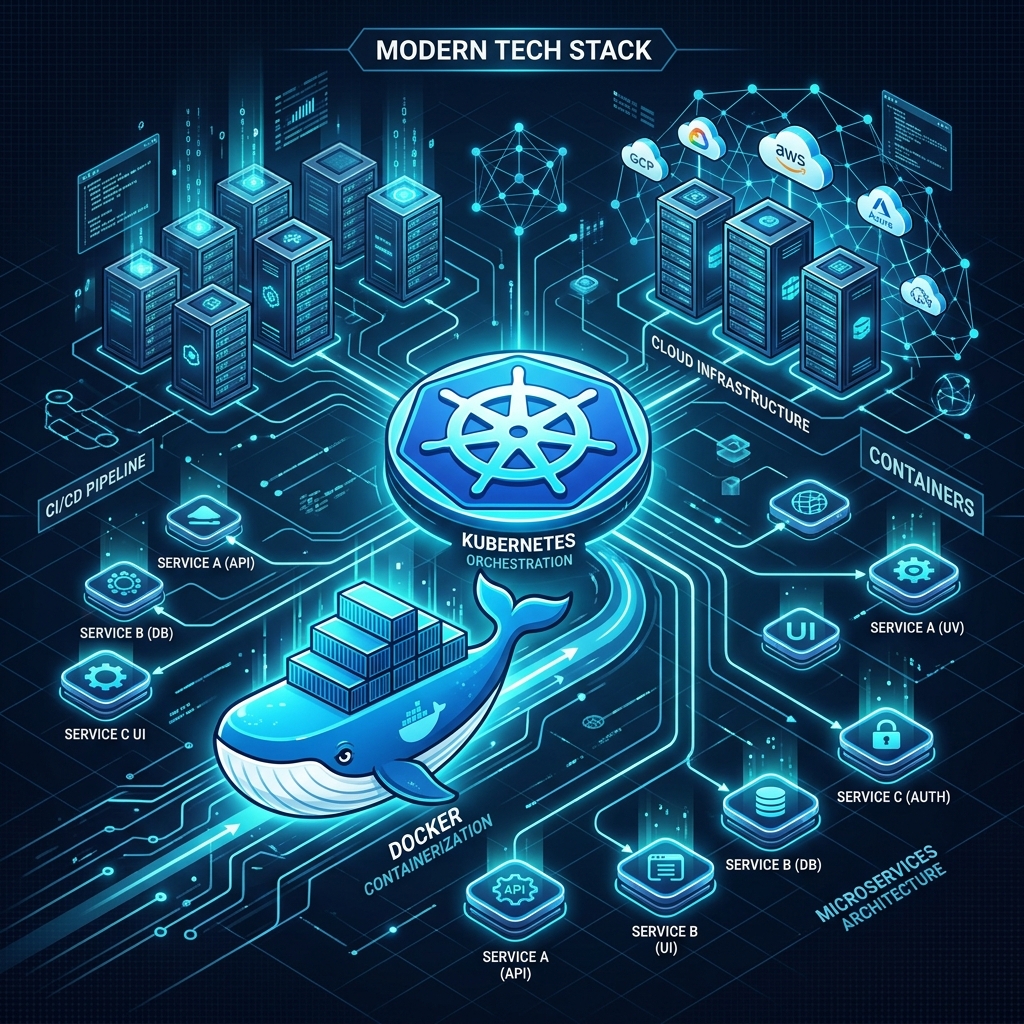
Navigating Containerization and Kubernetes Orchestration in 2026
Modern software delivery has undergone a fundamental transformation over the past decade. Monolithic application deployments hosted on dedicated virtual machines have given way to modular microservices encapsulated inside lightweight container runtimes. Docker revolutionized application packaging by standardizing container images, while Kubernetes established itself as the undisputed container orchestration platform for scaling, self-healing, and managing distributed workloads across multi-cloud infrastructure.
As cloud-native architectures grow increasingly complex—encompassing service meshes, declarative GitOps deployment pipelines, custom resource definitions (CRDs), and automated autoscaling—developers and DevOps engineers frequently face challenging operational scenarios. Telegram developer communities have emerged as vibrant real-time hubs where engineers collaborate to resolve complex infrastructure bugs, optimize multi-stage Dockerfiles, audit Kubernetes manifest security, and share production-grade deployment strategies.
Whether you are configuring your first Kubernetes cluster, tuning resource requests and limits, or debugging ingress routing rules, joining dedicated technical Telegram groups gives you direct access to active cloud architects and systems engineers.
Top Docker & Kubernetes Communities on Telegram
Below is a curated selection of active developer communities from our directory specializing in backend infrastructure, containerization, system design, and cloud-native software engineering.
| Group Name | Username | Members | Key Focus | View Details |
|---|---|---|---|---|
| Coders of Code | @codersofcode | 144,173 | Systems Design & Cloud Infrastructure | View @codersofcode Details |
| Geek Gurus | @geekgurus | 132,680 | Microservices & Container Orchestration | View @geekgurus Details |
| Dev Developers Zone | @devdeveloperszone | 131,342 | DevOps Engineering & GitOps | View @devdeveloperszone Details |
| Architects of Node | @architectsofnode | 127,314 | Backend Microservices & API Gateways | View @architectsofnode Details |
| Code Minds Network | @codemindsnetwork | 126,236 | Distributed Systems & Kubernetes | View @codemindsnetwork Details |
| Fullstack Ninjas Hub | @fullstackninjashub | 120,089 | Cloud Native & Container Security | View @fullstackninjashub Details |
Detailed Community Breakdown
Coders of Code (@codersofcode)
With over 144,000 active technology enthusiasts, View @codersofcode Details serves as a primary hub for broad software engineering discussions. Member discussions frequently cover infrastructure design, Docker daemon configurations, and cloud-native architectural patterns. Engineers share insights on optimizing container layer caching and building resilient CI/CD pipelines.
Geek Gurus (@geekgurus)
Boasting more than 132,000 members, View @geekgurus Details is tailored for backend developers and infrastructure operators. The community places a strong emphasis on microservices communication, Kubernetes control plane architecture, and distributed consensus mechanisms. It is an ideal space to discuss service discovery, internal mesh traffic routing, and load balancing configurations.
Dev Developers Zone (@devdeveloperszone)
The View @devdeveloperszone Details community brings together over 131,000 engineers focused on DevOps methodologies, infrastructure as code (IaC), and GitOps principles. Members regularly troubleshoot Terraform modules, Helm chart template logic, ArgoCD sync errors, and Kubernetes custom resource definitions.
Architects of Node (@architectsofnode)
Specializing in scalable server-side systems, View @architectsofnode Details brings together 127,000+ developers building node-based microservices and asynchronous workers. Discussions frequently center around containerizing Node.js runtimes, handling graceful pod shutdown signals, managing persistent volumes, and optimizing memory limits in Kubernetes pods.
Code Minds Network (@codemindsnetwork)
Featuring over 126,000 members, View @codemindsnetwork Details focuses heavily on cloud architecture, distributed systems, and enterprise Kubernetes cluster management. Participants explore advanced topics such as horizontal pod autoscaling (HPA), custom metric server setup, network policies, and multi-tenant cluster isolation.
Fullstack Ninjas Hub (@fullstackninjashub)
With a thriving community of over 120,000 fullstack and cloud engineers, View @fullstackninjashub Details offers comprehensive coverage of fullstack deployment workflows. From multi-stage Docker builds for modern web frameworks to configuring TLS termination at ingress proxies, this group provides practical advice for real-world application deployments.
Key Technical Pillars Discussed in Container Groups
1. Multi-Stage Dockerfile Optimization and Security
A major topic of discussion in container communities centers on constructing minimal, secure container images. Standard base images often contain unneeded utilities and compilers that increase attack surfaces and expand image size.
Developers in these groups discuss techniques such as:
- Utilizing distroless or Alpine Linux base images to minimize overall image footprint.
- Utilizing multi-stage builds to separate compilation dependencies from final execution runtimes.
- Implementing non-root container user execution (
USER 10001) to enhance security posture. - Scanning image layers for known CVE vulnerabilities using security scanners like Trivy or Grype before pushing to private registries.
Official guidance on containerization techniques can be explored further in the official Docker Documentation.
2. Kubernetes Cluster Architecture and Declarative Management
Navigating Kubernetes requires understanding the interplay between control plane components and worker node runtimes. Engineers inside Telegram communities often exchange advice on maintaining cluster health and operational resilience.
Core concepts frequently addressed include:
- Control Plane Dynamics: Configuring
etcdcluster backups, API server rate limiting, and controller reconciliation loops. - Declarative Manifest Management: Authoring clean YAML manifests for Deployments, StatefulSets, DaemonSets, and Ingress resources.
- Package Management via Helm: Structuring modular Helm charts with configurable value files, template helpers, and dependency hooks.
- Resource Budgeting: Setting precise CPU and memory requests and limits to prevent Out-Of-Memory (OOM) pod eviction.
Comprehensive cluster management specifications are maintained within the Kubernetes Documentation.
3. Service Mesh and Observability in Distributed Pods
As application scale increases, managing inter-service communication, mutual TLS (mTLS) encryption, and distributed tracing becomes critical. Developers in these groups regularly discuss service mesh solutions like Istio and Linkerd alongside telemetry tools.
Key observability practices shared in community channels:
- Extracting application metrics via Prometheus scrapers and visualizing cluster metrics on Grafana dashboards.
- Implementing OpenTelemetry instrumentation to trace request latencies across microservices boundaries.
- Configuring retry policies, circuit breakers, and traffic mirroring without modifying application source code.
Best Practices for Participating in Container Developer Groups
To maximize the benefits of participating in technical Telegram groups, follow these guidelines when seeking advice or contributing to discussions:
- Provide Clear Context: When asking for help with a broken deployment, share your sanitized YAML manifest or Dockerfile along with exact error outputs from
kubectl logsorkubectl describe pod. - Sanitize Sensitive Data: Never post configuration files containing unencrypted API keys, database credentials, TLS certificates, or internal IP ranges.
- Search Group History: Before asking common questions regarding ingress routing or volume claims, use Telegram's search feature to check if the issue has already been resolved in past conversations.
- Give Back to the Community: Share your successful troubleshooting steps when you resolve a complex issue, helping other members learn from your experience.
Discover More Technical Telegram Communities
If you are expanding your technical skill set across related domains, explore our categorized directory for additional specialized Telegram groups:
- Explore broader software development channels in our Programming Category.
- Find international developer discussions sorted by language in our English Developer Directory.
- Discover backend and microservice communities in our collection of specialized technology groups.
By joining active containerization communities, you can stay informed about cloud-native best practices, streamline your container workflows, and build resilient infrastructure for modern web applications.
Want more Telegram insights?
Subscribe to our weekly newsletter for the fastest growing communities.
Use the form in the footer below! 👇